Why This Decision Is Harder Than It Looks
When water is spreading across your floor or smoke damage covers every surface in a room, you don’t have time for a leisurely vetting process. That urgency is exactly what some operators count on. The fastest way to avoid getting burned is to know, before disaster strikes, what separates a legitimate restoration company from a storm-chasing outfit that shows up after a bad hailstorm, takes a deposit, and disappears.
Denver sees this pattern more than most cities. A heavy spring hailstorm or a hard freeze that splits a pipe brings out-of-town crews into neighborhoods for a few weeks at a time. Some are reputable. Many are not licensed in Colorado, carry no local accountability, and vanish once the insurance check clears. Knowing what to check, and what to ask, protects both your home and your claim.
Red Flags That Should Make You Pause
Not every company that knocks on your door after a storm is a problem, but certain behaviors should slow you down before you sign anything:
- They pressure you to sign a contract on the spot, especially one that assigns your insurance benefits directly to them (an “assignment of benefits”) before any inspection has happened.
- They can’t name a physical address in the Denver area or only operate out of a cell phone and a magnetic door sign.
- They quote a price before inspecting the damage, which is nearly impossible to do accurately for water or fire losses where the real extent is often behind walls or under flooring.
- They ask you to pay the full amount upfront, in cash, before any work begins.
- They can’t explain their drying or remediation process beyond “we’ll dry it out” or “we’ll clean it up.”
None of these automatically mean fraud, but two or more together is a reason to get a second opinion before committing.
Questions to Ask Before You Hire Anyone
A legitimate restoration company should be able to answer these without hesitation:
- Are you certified, and in what? IICRC certification (the industry’s standard training body) in water, fire, or mold work means the technicians were trained on documented drying and restoration standards, not just equipment rental.
- Will you work directly with my insurance carrier? Ask specifically how they document the loss, moisture readings, and photos, since that documentation is what your adjuster uses to approve the claim.
- What does the scope of work actually include? Water damage restoration, fire damage restoration, and mold remediation are three different disciplines with different equipment and timelines. A company that tells you “we do it all” without explaining the process for your specific loss is giving you a sales pitch, not an answer.
- Can you show me a written estimate before work starts? Verbal promises don’t hold up when the final invoice is three times higher than expected.
- Who is actually on-site? Ask whether the people doing the work are employees or subcontracted day labor, since accountability matters if something goes wrong.
What NOT to Do While You’re Deciding
- Don’t let anyone start demolition before your insurance adjuster has seen the damage, unless it’s genuinely urgent (active flooding, structural danger, or a safety hazard). Tearing out drywall or flooring too early can complicate your claim.
- Don’t sign a contract you haven’t read fully, especially anything involving an assignment of benefits. Once signed, you may lose the ability to negotiate directly with your own insurer.
- Don’t assume the first company on scene is the only option. A short delay to call a second company for comparison rarely makes a water or fire loss meaningfully worse, and it can save you from a bad contract.
- Don’t pay in full before the work is complete and inspected. A reasonable deposit is normal; paying everything upfront is not.
- Don’t ignore the smell. If mold odor, standing water, or smoke residue lingers after a company says the job is “done,” that’s a sign the work wasn’t finished to standard, not something to live with.
When to Call a Professional (and What Happens Next)
If you’re dealing with standing water, a burst pipe, fire or smoke damage, or a mold problem that’s spread beyond a small, contained area, this is the point to bring in a certified restoration company rather than handling it yourself. DIY wet-vacuuming and fans can manage a small spill, but water that has reached subfloor, drywall, or insulation needs moisture readings and structural drying equipment to actually dry out, not just look dry on the surface.
A legitimate company’s process usually starts the same way regardless of the type of loss: an inspection to document the extent of damage, moisture mapping or air quality assessment where relevant, a written scope of work, and direct communication with your insurance carrier about what’s covered. For water losses, that means monitoring drying progress with meters over several days, not just running fans and leaving. For fire and smoke damage, it means assessing soot penetration into porous materials, not just surface cleaning. For mold, it means identifying the moisture source first, since remediation without fixing the underlying leak just invites the problem back.
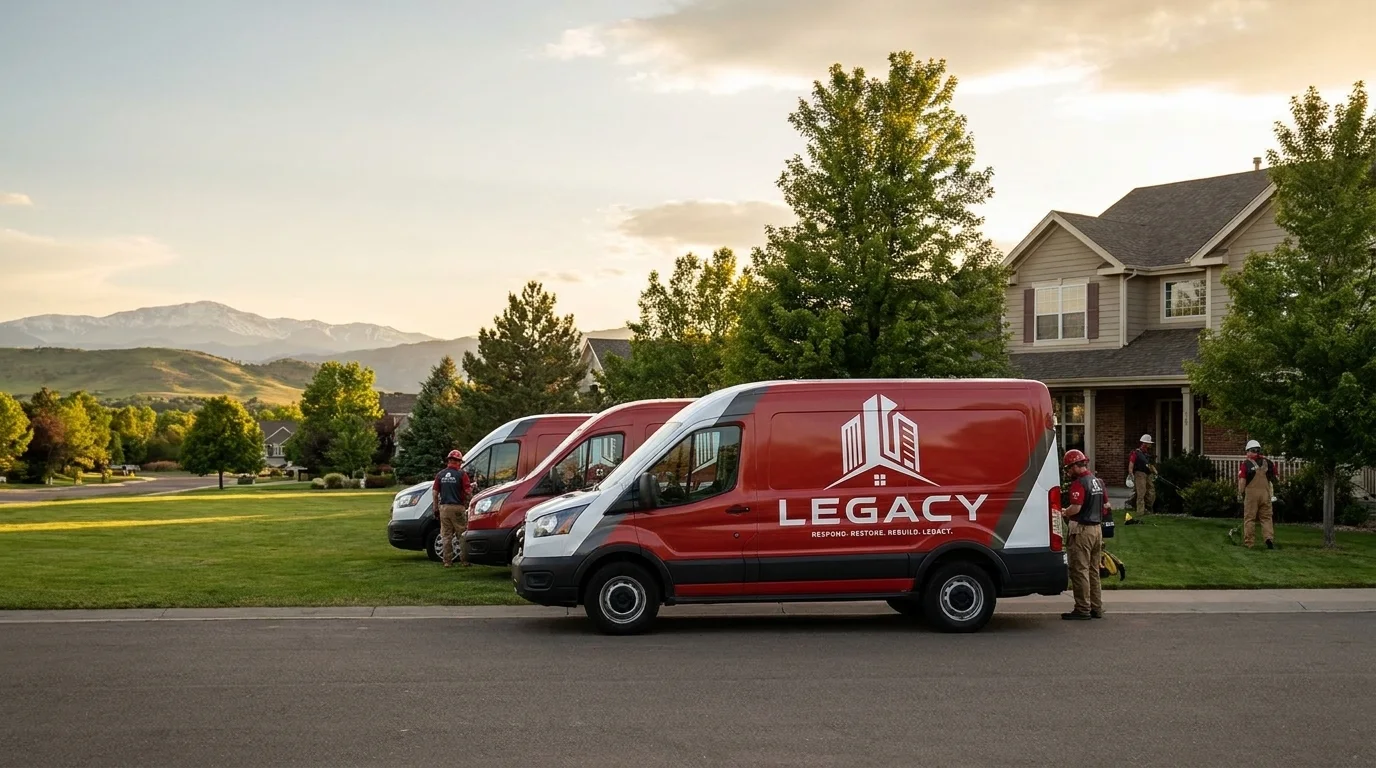
Legacy Resto LLC is an IICRC Certified Firm serving Denver, with technicians trained under IICRC standards for water (WRT), fire and smoke (FSRT), structural drying (ASD), and mold (AMRT). If you’re trying to decide whether a quote you received sounds right, or you just want a second opinion on a loss before signing anything, that’s a reasonable call to make, not an overreaction.
Getting It Right the First Time
The cost of choosing poorly isn’t just money, it’s time: a mold problem that returns because the moisture source was never fixed, or a water claim that gets denied because documentation was missing. Taking an extra hour to vet a company before signing anything is almost always cheaper than redoing the work six months later.
If you’re facing a water, fire, or mold situation in Denver and want a straight answer about what you’re looking at, call Legacy Resto LLC at (888) 249-5867. A second opinion costs you nothing but the time it takes to ask.