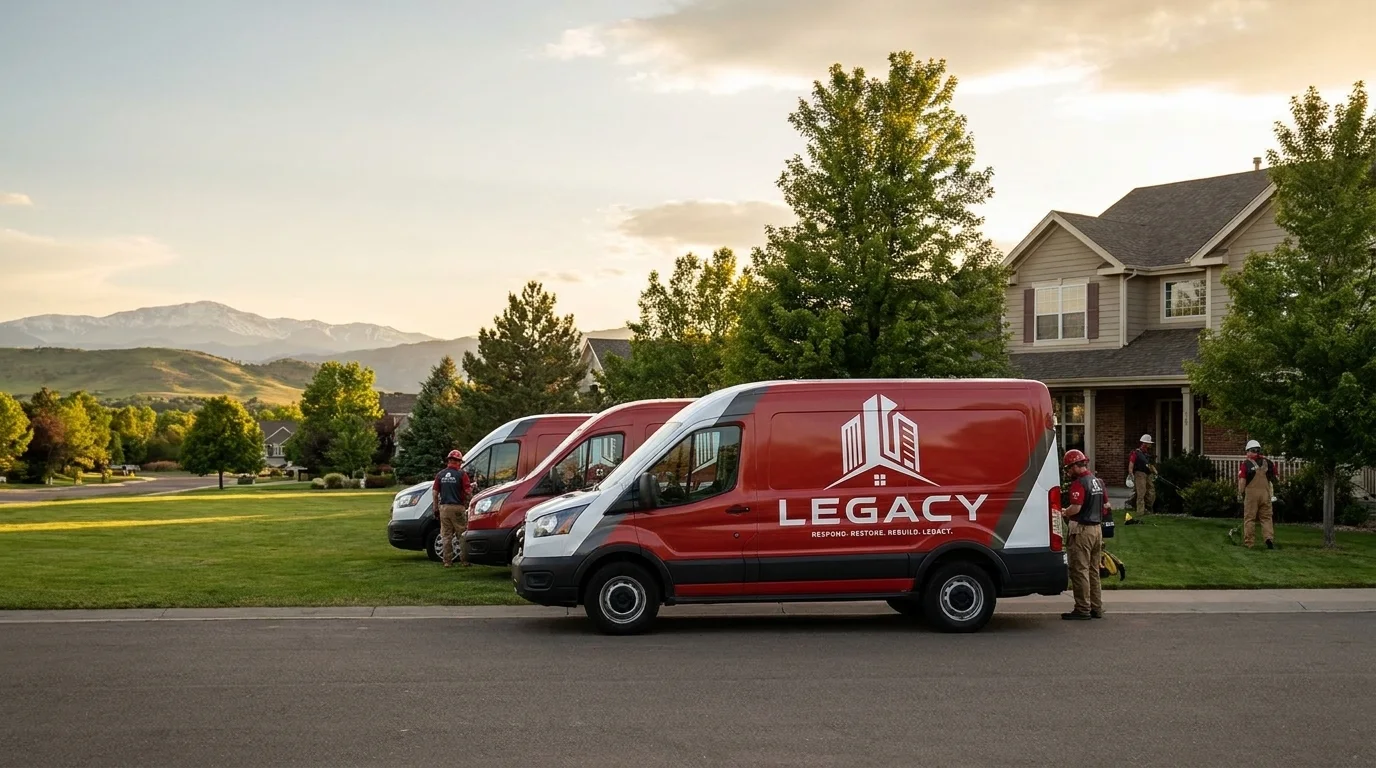
24/7 Emergency Water Removal & Cleanup in Denver
24/7 emergency water removal & cleanup in Denver and surrounding areas. IICRC-certified, insurance billing accepted. Call (888) 249-5867.
Water spreading across your floor right now? Call (888) 249-5867. We answer 24/7, and every minute water sits on flooring, drywall, or subfloor increases the chance it migrates into wall cavities and framing where you can’t see it.
A burst supply line, an overflowing appliance, or a failed sump pump doesn’t wait for business hours, and neither does the damage. Water finds the path of least resistance, wicking up drywall, pooling under engineered flooring, and soaking into subfloor before most homeowners even notice a problem. Emergency water removal and cleanup is the fast, first-hours response that gets standing water out of the structure before it becomes a secondary problem like swollen baseboards, delaminated flooring, or microbial growth.
What Emergency Water Removal & Cleanup actually involves
This service covers the first critical phase after a water intrusion: getting bulk water off the property and stopping the damage from spreading. That means truck-mounted or portable extraction units pulling standing water from floors and carpet pad, moisture meters and thermal imaging to map how far water has traveled into walls and subfloor, and air movers and dehumidifiers placed to begin structural drying immediately. For water carrying contamination, which is Category 2 (gray water from appliances or sump backups) or Category 3 (sewage or flood water), the work also includes containment barriers and controlled removal of unsalvageable porous materials. The goal in the first hours is simple: extract what’s standing, stop the spread, and start drying before 24 to 48 hours pass, which is roughly the window before untreated moisture starts supporting mold growth.
Our process
- Phone triage and water source control. Before a truck arrives, we ask what’s flooding, where it’s coming from, and whether the source is shut off. This shapes what equipment the crew brings.
- Extraction. Standing water comes out first, using pumps for deep water and extraction wands or weighted extractors for water trapped in carpet and pad.
- Moisture mapping. Moisture meters and thermal imaging identify how far water has traveled behind baseboards, under flooring, and into subfloor, so drying targets the actual wet area, not just what’s visible.
- Containment, when needed. For Category 2 or 3 water, we isolate the affected area to keep contaminated water and airborne particulates from spreading to dry parts of the structure.
- Drying equipment placement and monitoring. Air movers and dehumidifiers go in immediately, and moisture readings are logged over the following days to confirm materials are actually drying, not just feeling dry on the surface.
What separates a good emergency water response from a bad one
The most common mistake is treating this as a wet-vac job. Surface water is the easy part; the water that soaks into subfloor, wall cavities, and insulation is what causes callbacks weeks later. A rushed or inexperienced crew pulls visible water, sets a couple of fans, and leaves, without checking whether moisture has wicked up drywall or pooled under flooring where it won’t evaporate on its own. Insurance adjusters know this too, and they look for documented moisture readings over time, not a single before-and-after photo. Proper drying, logged per the IICRC S500 standard, includes daily or near-daily moisture checks until readings return to a dry standard, not just until the space looks dry. Skipping that step is how homeowners end up with hidden mold or warped flooring months after the original claim closed.
What does Emergency Water Removal & Cleanup cost?
Costs depend on how much water is involved, how far it traveled, and whether it’s clean water or contaminated. Every loss is different, which is why Legacy Resto LLC provides a written scope of work before any extraction or drying begins. Homeowners insurance typically covers sudden and accidental water damage, such as a burst pipe or failed appliance, though gradual leaks and flood-related water are often excluded or require separate coverage.
| Scenario | Typical range |
|---|---|
| Single room, clean water, minimal extraction | $1,200 - $3,500 |
| Multiple rooms, carpet and pad extraction | $3,000 - $6,500 |
| Category 2 water with containment | $4,500 - $9,000 |
| Water affecting subfloor or wall cavities | $6,000 - $12,000+ |
| Whole-level flooding with structural drying | $10,000 - $20,000+ |
Seasonal & regional considerations
Denver’s freeze-thaw cycles are a frequent trigger for this kind of emergency. A hard freeze followed by a quick warm-up is a classic setup for burst pipes in exterior walls, crawl spaces, and unheated basements, especially in older homes with galvanized or copper supply lines that have seen decades of thermal stress. Rapid spring snowmelt and afternoon storm runoff can also overwhelm sump pumps and window wells, pushing water into basements faster than a standard pump can keep up. In both cases, the speed of the response matters more than the size of the crew.
Service area
Legacy Resto LLC provides emergency water removal and cleanup throughout Denver, Colorado.
If water is actively spreading through your home or business, don’t wait to see how bad it gets. Call (888) 249-5867 now and get a crew moving on extraction before the damage reaches framing, subfloor, or insulation.
Frequently Asked Questions
Does homeowners insurance cover emergency water removal and cleanup?
How do you know if water has spread beyond what I can see?
What's the difference between Category 1, 2, and 3 water, and why does it matter for cleanup?
How long does the drying process take after extraction?
What should I do with standing water before your crew arrives?
Looking for the best emergency water removal & cleanup company in Denver?
Legacy Resto llc provides licensed and insured emergency water removal & cleanup in Denver, Colorado and the surrounding area, and has served local property owners since 2022. We answer calls 24/7 — call (888) 249-5867 for immediate help.
Need Emergency Water Removal & Cleanup now?
We respond 24/7 across Denver and surrounding Colorado cities.