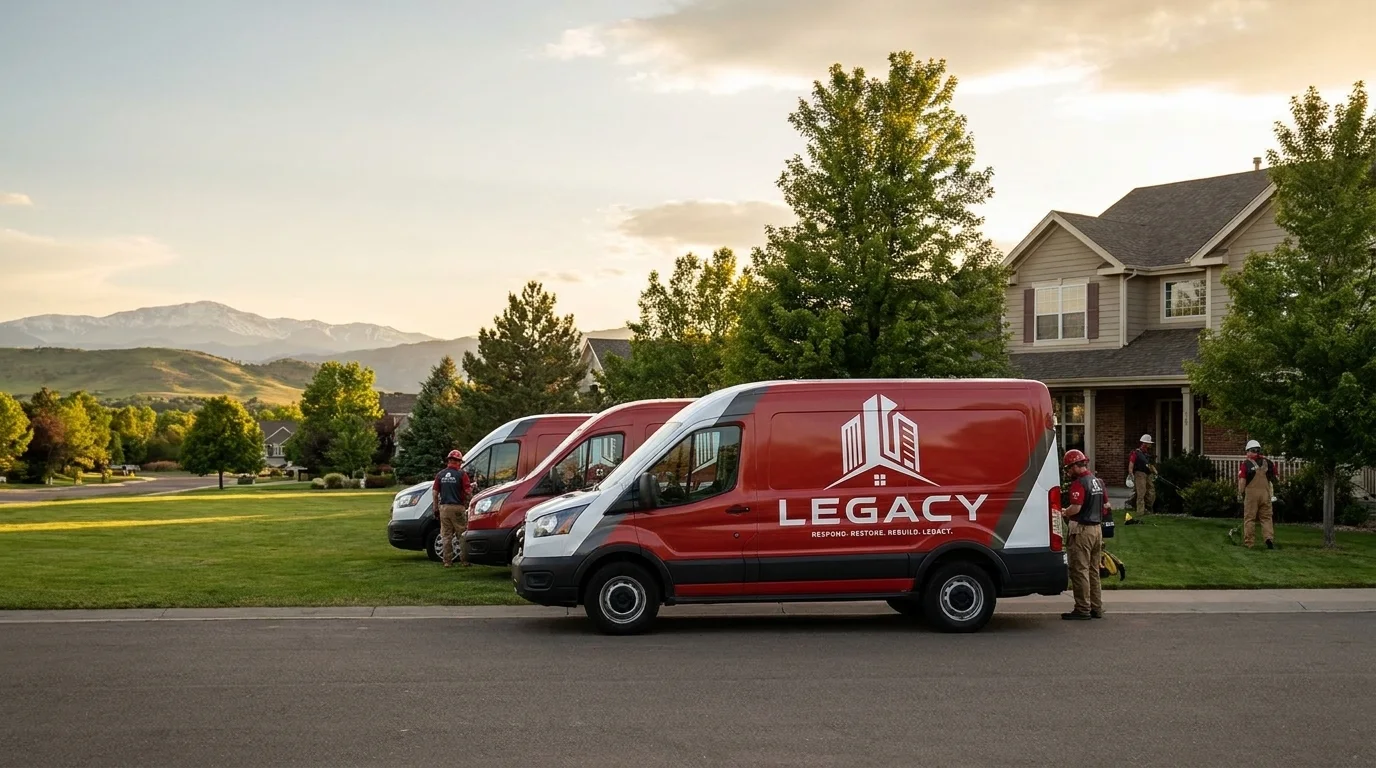
24/7 Emergency Flood Damage Restoration in Denver
24/7 emergency flood damage restoration in Denver and surrounding areas. IICRC-certified, insurance billing accepted. Call (888) 249-5867.
Flood water behaves differently than a burst pipe or an overflowing washing machine. It arrives from outside the structure, carries silt, soil, and sometimes sewage from overwhelmed storm drains, and often affects more than one room before anyone notices. If your property has taken on water from a flash flood, snowmelt runoff, or a swollen creek, the clock on contamination and structural saturation starts immediately. Legacy Resto llc provides flood damage restoration across Denver, and we answer 24/7.
What Flood Damage Restoration actually involves
Flood damage restoration is distinct from a typical interior water loss because the source is almost always outside the building envelope and the water is rarely clean. Overland flooding, storm surge through window wells, or creek and drainage overflow usually qualifies as Category 3 water under IICRC guidelines, meaning it’s treated as contaminated until tested otherwise. That changes everything about the response: porous materials that touched floodwater (carpet pad, drywall below the waterline, insulation, particleboard cabinetry) typically can’t be dried and saved, they have to come out. Crews document the waterline, remove affected materials, extract standing water, and then dry the remaining structure with air movers, dehumidifiers, and moisture meters, monitoring daily until readings return to a dry standard. Depending on how much of the structure was submerged and for how long, this can run from a few days for a shallow, contained flood to a couple of weeks for a basement that sat under several inches of water overnight.
Our process
- Contamination and safety assessment. Before anything is touched, we identify the water source and category, check for electrical hazards, and determine whether sewage backflow or chemical runoff is present.
- Bulk extraction and debris removal. Standing water, silt, and mud get pumped and removed first, since floodwater often deposits sediment that traps moisture against flooring and walls.
- Selective demolition of non-salvageable materials. Wet insulation, saturated drywall, and contaminated carpet are removed to the point of the waterline, opening wall cavities so the framing underneath can actually dry.
- Structural drying and antimicrobial treatment. Air movers and dehumidifiers go in, moisture is tracked daily with meters and thermal imaging, and exposed framing and subfloor are treated to address the contamination risk floodwater carries.
- Reconstruction handoff. Once the structure reads dry, our reconstruction team can rebuild drywall, flooring, and trim so the space is handed back whole, not just dried out.
What separates a good Flood Damage Restoration response from a bad one
The most common mistake is treating floodwater like a clean-water leak: drying it in place instead of removing contaminated materials first. That shortcut leaves silt and bacteria trapped behind walls, and the smell or the mold usually shows up a few weeks later, after the drywall has already been painted over. A second mistake is under-documenting the loss. Adjusters want moisture logs, photos of the waterline before demolition, and a clear record of what was removed and why, without that paper trail, claims get disputed or underpaid. Good operators also test before assuming every room needs the same treatment; a utility room that took two inches of water doesn’t need the same demolition as a finished basement that sat flooded overnight. We write a documented scope before work begins so both you and your adjuster know exactly what’s being done and why.
What does Flood Damage Restoration cost?
Costs vary widely because flood losses rarely affect just one surface, they involve contamination level, how many rooms were affected, and how long the water sat before anyone caught it. Every loss gets a written scope from Legacy Resto llc before work starts, so you know what’s included and what isn’t. Homeowners insurance treats flood damage differently depending on the policy: standard homeowners coverage often excludes water that enters from outside the home (true flooding), while water from a plumbing failure or storm-driven interior damage is more commonly covered, so it’s worth confirming your specific policy language early.
| Scenario | Typical range |
|---|---|
| Single room, shallow clean water, fast response | $1,500 - $4,000 |
| Finished basement, partial flooding, some demolition | $4,000 - $9,000 |
| Whole-level flood, contaminated water, full demolition and drying | $9,000 - $20,000 |
| Crawl space or structural flood with insulation and subfloor loss | $5,000 - $12,000 |
| Large-scale, multi-room flood with contents and reconstruction | $20,000+ |
Seasonal & regional considerations
Denver’s flood risk is seasonal and tied to terrain more than to chronic rainfall. Spring snowmelt swells creeks and drainage channels, and summer brings fast-moving thunderstorms that can drop a large volume of rain in a short window, more than the area’s clay-heavy soil and storm drains can absorb quickly. Older neighborhoods with below-grade basements and window wells are particularly exposed when nearby drainage can’t keep pace. Because the region’s flood control infrastructure is built around managing these bursts rather than sustained rainfall, a fast response in the first hours after water enters a structure matters more here than almost anywhere else.
Service area
Legacy Resto llc provides flood damage restoration throughout Denver, Colorado, with 24/7 response for crews licensed under CGC1536943.
If floodwater has reached your basement, crawl space, or ground floor, don’t wait to see if it dries on its own. Call Legacy Resto llc to schedule your flood damage assessment and get a written scope before any demolition or drying begins.
Frequently Asked Questions
How do you know if floodwater is contaminated?
How do you know if floodwater is contaminated?
Why does flooded drywall or insulation sometimes have to be removed instead of dried?
How long does a flooded basement take to dry out?
What should I do while waiting for a flood restoration crew to arrive?
Looking for the best flood damage restoration company in Denver?
Legacy Resto llc provides licensed and insured flood damage restoration in Denver, Colorado and the surrounding area, and has served local property owners since 2022. We answer calls 24/7 — call (888) 249-5867 for immediate help.
Need Flood Damage Restoration now?
We respond 24/7 across Denver and surrounding Colorado cities.