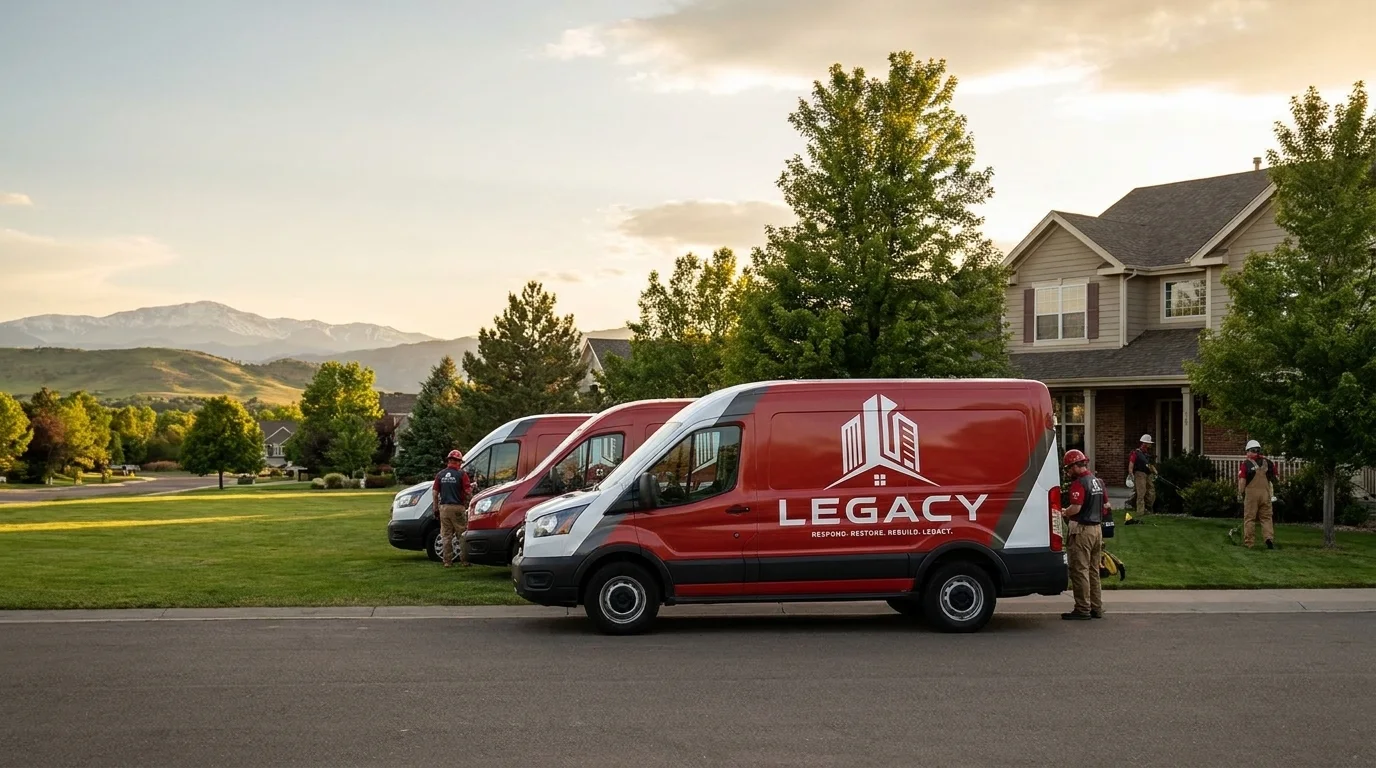
24/7 Emergency Fire Damage Restoration in Denver
24/7 emergency fire damage restoration in Denver and surrounding areas. IICRC-certified, insurance billing accepted. Call (888) 249-5867.
Fire damage emergency in Denver? Call now, we answer 24/7. The smell of smoke doesn’t fade on its own, and soot residue left on drywall, cabinetry, and HVAC components keeps etching into surfaces for days after the flames are out. The longer it sits, the more it costs to reverse.
A fire doesn’t have to touch a room for that room to need restoration. Smoke travels through ductwork and wall cavities, acidic soot particles continue corroding metal and glass long after the fire department leaves, and water used to extinguish the fire often causes a second wave of damage that shows up as warped flooring or hidden mold days later. Fire damage restoration deals with all three problems at once, not just the charred materials that are obvious on walkthrough.
What Fire Damage Restoration actually involves
Fire restoration starts with characterizing the soot, because protein residue from a kitchen fire behaves nothing like the dry, powdery soot from a fast-burning synthetic fire or the thick, oily film from a smoldering structural fire. Each type demands a different cleaning agent and technique, and using the wrong one can set a stain permanently or smear residue deeper into porous material. Our technicians, trained to IICRC FSRT standards, evaluate affected surfaces room by room before any cleaning begins.
The work itself typically includes structural cleaning of framing, subfloor, and masonry; content cleaning or pack-out for salvageable furniture, textiles, and electronics; deodorization using thermal fogging or ozone treatment to neutralize smoke odor at the molecular level rather than masking it; and HVAC system cleaning, since soot drawn through return vents can recontaminate a cleaned space within days if the ductwork is ignored. Larger structural fires may also require board-up or tarping to secure the property against weather and intrusion while repairs are scoped, which our crews handle as part of the same response.
Our process
- Soot and damage characterization. We identify the soot type (protein, synthetic, or natural) and map which surfaces are affected by direct heat, smoke travel, or water from suppression efforts.
- Securing the structure. Broken windows, compromised roofing, or exposed openings get boarded or tarped so the property isn’t exposed to weather, theft, or further damage while work proceeds.
- Content pack-out and inventory. Salvageable furniture, electronics, and textiles are documented, packed, and moved to secure storage for specialized cleaning away from the active worksite.
- Structural cleaning and thermal fogging. Framing, drywall, and fixed surfaces are cleaned with soot-specific agents, followed by thermal fogging or ozone treatment to address odor trapped in porous materials.
- HVAC and final clearance. Ductwork is cleaned to prevent recontamination, and the space is checked against pre-loss condition before we close out the scope.
What separates a good fire damage response from a bad one
The most common mistake is treating fire damage as a cosmetic cleanup instead of a structural one. Crews that skip HVAC cleaning often leave a property smelling like smoke weeks later, because soot particles recirculate every time the system runs. Another frequent miss is cleaning over soot without neutralizing the acidic residue first, which leads to metal fixtures corroding or yellowing months after the job is considered done.
Insurance adjusters pay close attention to documentation: pre-cleaning photos of soot patterns, moisture readings where suppression water was used, and an itemized content inventory before pack-out. A restoration team that doesn’t document thoroughly at each stage puts the homeowner at risk of a dispute later. We document before, during, and after every stage of a fire loss so the claim file matches the physical work performed.
What does Fire Damage Restoration cost?
Fire damage costs vary more than almost any other restoration category because so much depends on soot type, how far smoke traveled, and whether structural materials were charred or just discolored. Most homeowners insurance policies cover fire and smoke damage restoration when the fire is sudden and accidental, though policy language and coverage limits differ, so it’s worth confirming details with your carrier. Every loss gets a written scope of work before any cleaning or repair begins, because these ranges are industry-typical figures, not a quote for your specific property.
| Scenario | Typical range |
|---|---|
| Single room, light smoke only | $1,500 - $4,000 |
| Kitchen fire with protein soot | $4,000 - $9,000 |
| Multi-room smoke and soot damage | $8,000 - $20,000 |
| Structural fire with charred framing | $20,000 - $50,000+ |
| Content pack-out and specialty cleaning | $1,000 - $6,000 |
| HVAC system cleaning after fire | $500 - $1,500 |
Seasonal & regional considerations
Denver’s dry climate and low humidity actually work in a homeowner’s favor during fire cleanup, since it slows secondary mold growth from suppression water compared to more humid regions. Winter heating season brings its own pattern of space heater and fireplace-related fires in the city’s older bungalow and brick housing stock, where original plaster walls and lath can trap smoke odor more stubbornly than modern drywall. That’s part of why thermal fogging and ozone treatment are often necessary rather than optional on pre-1960s Denver homes.
Service area
Legacy Resto LLC provides fire damage restoration throughout Denver, Colorado, responding to single-family homes, multi-unit buildings, and commercial properties across the city.
If a fire has gone out but the smell, soot, or standing suppression water hasn’t, don’t wait for it to set in further. Call (888) 249-5867 to begin smoke and soot removal, our IICRC-certified crews are available 24/7 to assess the damage and start a written scope of work.
Frequently Asked Questions
Does homeowners insurance cover fire damage restoration?
What's the difference between protein soot and synthetic soot, and why does cleanup vary?
How soon do I need to start fire damage restoration after the fire department leaves?
Can smoke odor be removed completely, or does it just get covered up?
What happens to my furniture and belongings during a fire restoration job?
Looking for the best fire damage restoration company in Denver?
Legacy Resto llc provides licensed and insured fire damage restoration in Denver, Colorado and the surrounding area, and has served local property owners since 2022. We answer calls 24/7 — call (888) 249-5867 for immediate help.
Need Fire Damage Restoration now?
We respond 24/7 across Denver and surrounding Colorado cities.