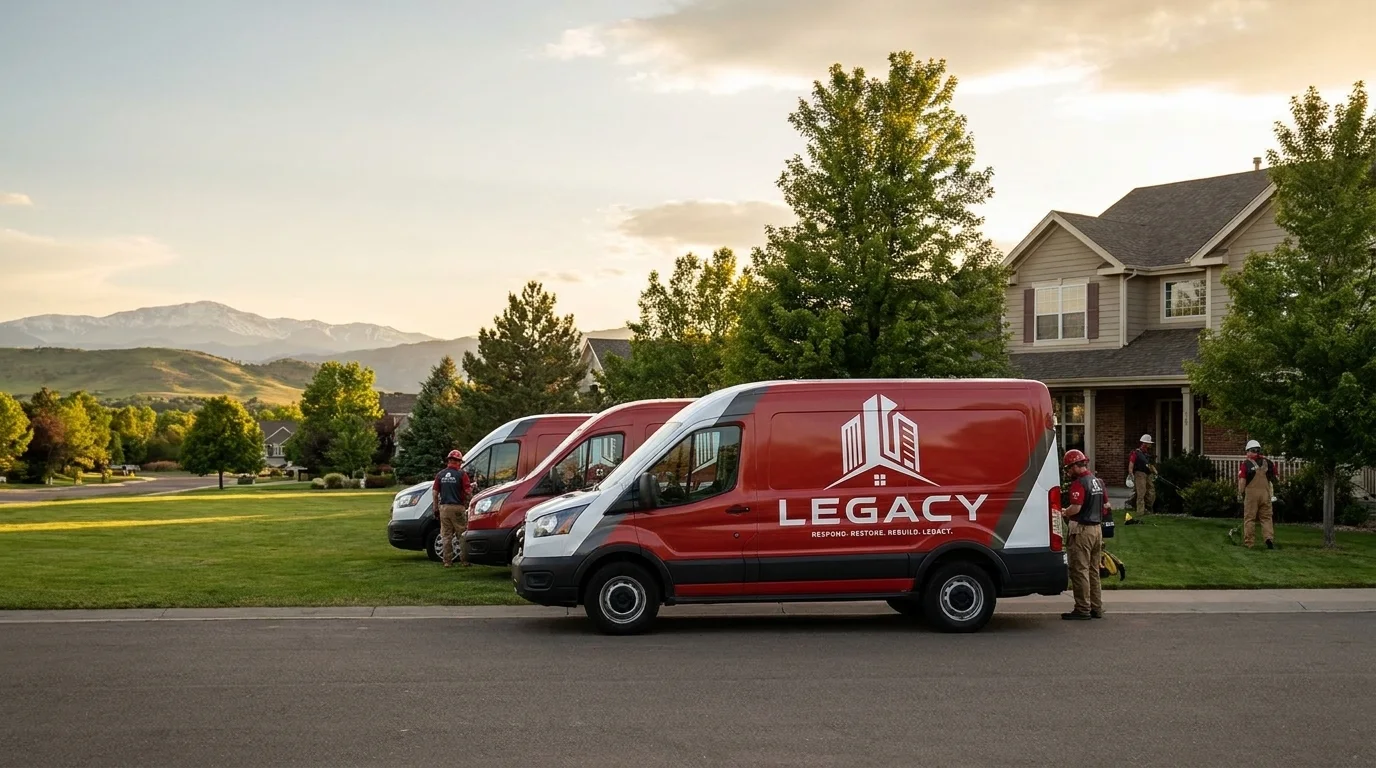
Asbestos Abatement in Denver
Asbestos abatement in Denver and surrounding areas. IICRC-certified, insurance billing accepted. Call (888) 249-5867.
A popcorn ceiling that’s been there since the house was built in the 1970s, a patch of pipe insulation in the basement that’s starting to crumble, or a renovation that just exposed old floor tile mastic: these are the moments Denver homeowners usually call us. Asbestos itself doesn’t announce itself with a smell or a stain. It sits quietly in building materials until something disturbs it, drilling, demolition, even a ceiling texture scraping off in your hand, and then it’s an airborne fiber problem that needs a licensed response, not a DIY fix.
What asbestos abatement actually involves
Abatement is the controlled removal or encapsulation of asbestos-containing materials so fibers don’t become airborne and don’t get breathed in. In Denver’s older housing stock, the materials we most often deal with are troweled or sprayed-on popcorn ceiling texture, vinyl floor tile and the black mastic underneath it, pipe and duct insulation wrap from pre-1980s construction, and occasionally vermiculite attic insulation. The work happens inside sealed containment, under negative air pressure, with crews in full PPE. Depending on the scope, a single-room popcorn ceiling job might wrap up in a day; a basement with wrapped pipe insulation and floor tile can run several days once containment, removal, and clearance testing are factored in.
Our process
- Sampling and lab analysis. Before anything is touched, we collect bulk samples from suspect material and send them to a lab for polarized light microscopy. You get a clear answer on whether asbestos is present and at what percentage before any demolition or renovation work proceeds.
- Containment and negative air setup. The work area is sealed with polyethylene sheeting, and a negative air machine with HEPA filtration keeps air pressure pulling inward, so fibers can’t migrate into the rest of the house through doorways or HVAC returns.
- Wet removal methods. Materials are kept saturated with an amended water solution throughout removal to suppress fiber release, a dry scrape or dry demo is one of the fastest ways to turn a contained problem into an exposure incident.
- Bagging, labeling, and manifested disposal. Removed material goes into sealed, labeled polyethylene bags and is transported under a waste manifest to a facility approved to accept asbestos-containing waste. This paperwork trail matters if the property is later sold or renovated again.
- Clearance air testing. Before containment comes down, air samples confirm fiber counts are back to an acceptable level before the space is reoccupied or handed back to another trade for finish work.
What separates a good asbestos abatement response from a bad one
The mistakes that cause real problems are almost always about containment and sequencing, not the removal itself. Dry-scraping popcorn texture instead of keeping it wet, running a shop vac instead of a HEPA-filtered unit, or skipping negative air entirely are the fastest ways to spread fibers into living space. Another common gap: contractors who disturb suspect material during a routine renovation (ripping out old flooring, for instance) without testing first, because the material looked fine and they assumed it wasn’t an issue. A careful operator tests before disturbing anything built before the 1980s, documents fiber counts at clearance, and keeps the waste manifest on file. Insurance adjusters reviewing a claim that involves abatement, say, after fire or water damage uncovers older materials, will look for lab reports, chain-of-custody documentation, and a clearance certificate, not just a verbal assurance the area is safe.
What does asbestos abatement cost?
Cost depends heavily on the material involved, the square footage, and whether removal requires full containment versus a smaller localized job. Typical industry costs run as follows, though every property is different and Legacy Resto llc provides a written scope of work with lab results before any removal begins.
| Scenario | Typical range |
|---|---|
| Testing and lab analysis only | $300 - $900 |
| Popcorn ceiling removal, single room | $1,500 - $4,000 |
| Vinyl floor tile and mastic, per room | $1,200 - $3,500 |
| Pipe or duct insulation wrap removal | $800 - $2,500 per section |
| Basement-wide abatement (floor tile, pipe wrap) | $4,000 - $9,000 |
| Vermiculite attic insulation removal | $5,000 - $12,000 |
Homeowners insurance typically does not cover asbestos abatement as a standalone project, but it may contribute when asbestos is disturbed as a direct result of a covered loss, like fire or water damage, and we document that connection carefully when filing.
Seasonal & regional considerations
Denver’s housing stock runs heavy on mid-century construction, split-levels, ranch homes, and older multifamily buildings built before asbestos-containing materials were phased out, so renovation and remodeling projects in these homes carry a real chance of encountering it. Winter renovation projects that seal up a house tighter for heating season also mean less natural air exchange, which is one more reason containment and negative air setup matter during interior abatement work done in colder months.
Service area
Legacy Resto llc handles asbestos testing and abatement for homes and buildings throughout Denver.
If a renovation just uncovered old floor tile, ceiling texture, or pipe wrap you’re not sure about, don’t keep working around it. Call (888) 249-5867 to schedule testing and get a written abatement scope before you disturb anything further.
Frequently Asked Questions
Does homeowners insurance cover asbestos abatement?
How do I know if my ceiling texture or flooring actually contains asbestos?
Is it safe to stay in the house during asbestos abatement?
What happens to the material once it's removed?
Can I just remove asbestos popcorn ceiling myself?
Looking for the best asbestos abatement company in Denver?
Legacy Resto llc provides licensed and insured asbestos abatement in Denver, Colorado and the surrounding area, and has served local property owners since 2022. We answer calls 24/7 — call (888) 249-5867 for immediate help.
Need Asbestos Abatement now?
We respond 24/7 across Denver and surrounding Colorado cities.