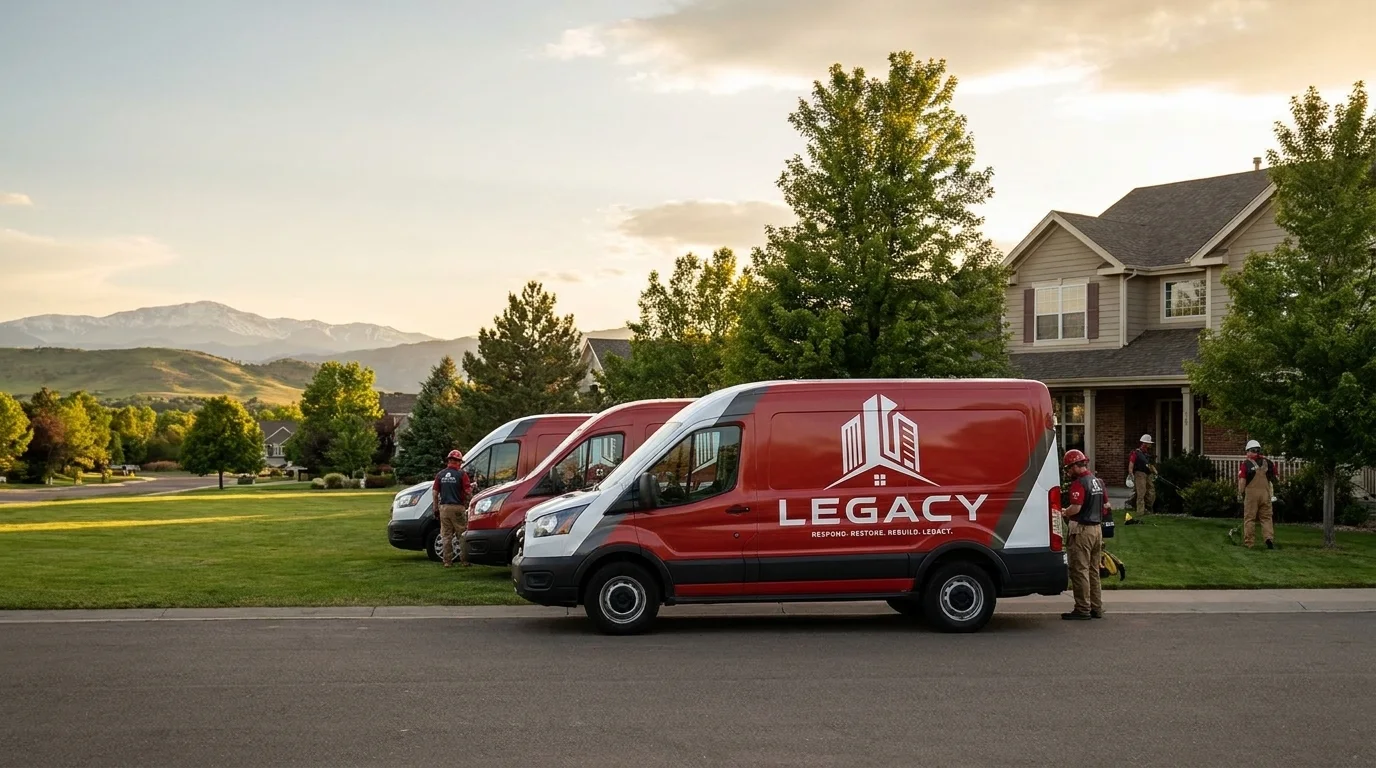
24/7 Emergency Basement Flooding Cleanup in Denver
24/7 emergency basement flooding cleanup in Denver and surrounding areas. IICRC-certified, insurance billing accepted. Call (888) 249-5867.
Basement flooding in Denver can go from a damp corner to a saturated subfloor in a matter of hours, especially when a sump pump fails during a spring thaw or a sewer backup pushes water up through a floor drain. We answer 24/7, and the clock matters: untreated basement water begins wicking into drywall, insulation, and framing almost immediately, and the enclosed, low-airflow nature of most basements means that moisture has nowhere to go on its own. Call (888) 249-5867 the moment you find standing water.
What Basement Flooding Cleanup actually involves
Basement flooding cleanup is its own discipline, not a smaller version of whole-house water damage work. Basements have concrete slab floors, block or poured foundation walls, sump pits, and often finished living space built directly against those walls, which means moisture behaves differently than it does upstairs. Our crews bring submersible pumps and truck-mounted extraction for standing water, then move to low-profile air movers and commercial dehumidifiers sized for concrete and masonry, which hold onto moisture far longer than wood framing. We check for water that has traveled behind finished walls, under carpet pad, and into the wall cavities of framed-out basements, since surface-dry concrete can still be saturated an inch below. Depending on the volume of water and how long it sat, drying a basement typically runs several days to a week, with daily moisture readings to confirm the slab and framing are actually dry, not just dry to the touch.
Our process
- Source identification and water categorization. Before anything is removed, we determine where the water came from (sump failure, foundation seepage, sewer backup, appliance leak) and classify it as clean, gray, or black water, since that determines PPE, disposal, and what materials can be saved.
- Standing water extraction. Submersible pumps clear bulk water from the floor while truck-mounted extractors pull saturated water out of carpet, pad, and any porous flooring before it spreads further.
- Removal of unsalvageable materials. Saturated carpet pad, baseboard, and drywall below the flood line are typically cut and removed, since wicking damage often extends well above the visible waterline.
- Structural drying and monitoring. Air movers and dehumidifiers are set based on room size and the concrete’s drying load, with moisture meters tracking the slab, framing, and any remaining wall cavities until readings return to normal.
- Sanitization and prep for rebuild. Affected surfaces are treated with antimicrobial solution, and once materials are confirmed dry, the space is ready for any drywall, flooring, or finish work the loss requires.
What separates a good basement flooding response from a bad one
The most common mistake in basement water loss is drying to the surface and stopping. A crew that pulls visible water, runs a couple of fans for a day, and calls it done often leaves saturation trapped behind baseboards, under the bottom plate of framed walls, or inside block cores, which shows up weeks later as a musty smell or discolored paint. A technical response documents moisture content with meters at the start and throughout drying, not just a visual check, and it accounts for the sump pump and any French drain system that caused or could re-cause the flooding, since re-drying the same basement twice is a sign something upstream wasn’t addressed. Insurance adjusters reviewing a basement claim typically look for dated moisture logs, photos of the water line and removed materials, and a clear water category determination, all of which should be part of the documentation before any drywall goes back up.
What does Basement Flooding Cleanup cost?
Basement flooding costs vary widely based on how much water intruded, how long it sat before cleanup started, and whether the space is finished or unfinished. Every loss gets a written scope before work begins, since the right figure depends on what our technicians find once materials are opened up, not a number quoted over the phone. Homeowners insurance typically covers sudden and accidental water losses, such as a sump pump or appliance failure, but often excludes gradual seepage or flooding from an outside water source, so it’s worth confirming your policy language before assuming coverage.
| Scenario | Typical range |
|---|---|
| Unfinished basement, minor standing water | $1,000 - $2,500 |
| Finished basement, clean water, partial drywall removal | $2,500 - $6,000 |
| Finished basement, sewer backup or gray/black water | $5,000 - $12,000 |
| Large or fully finished basement with extensive material removal | $10,000 - $20,000+ |
Seasonal & regional considerations
Denver’s freeze-thaw cycles put real stress on foundations and sump systems, since repeated freezing and thawing of soil around the foundation can widen hairline cracks that let groundwater in during the spring melt. Heavy spring and summer storms add another trigger, pushing more water toward foundations faster than some older drainage systems can handle, particularly in neighborhoods with aging clay or cast-iron sewer laterals where backups are more likely during peak flow events.
Service area
We provide basement flooding cleanup throughout Denver, responding to both older homes with original foundation drainage and newer construction with finished lower-level living space.
If your basement is taking on water right now, don’t wait for it to find its own level. Call (888) 249-5867 and schedule your basement water removal before the damage spreads past what’s visible.
Frequently Asked Questions
Does homeowners insurance cover basement flooding cleanup?
How do you know if basement water is clean, gray, or black water?
How long does it take to dry out a flooded basement?
Can finished basement drywall and flooring be saved after flooding?
What should I do while waiting for a crew after my basement floods?
Looking for the best basement flooding cleanup company in Denver?
Legacy Resto llc provides licensed and insured basement flooding cleanup in Denver, Colorado and the surrounding area, and has served local property owners since 2022. We answer calls 24/7 — call (888) 249-5867 for immediate help.
Need Basement Flooding Cleanup now?
We respond 24/7 across Denver and surrounding Colorado cities.