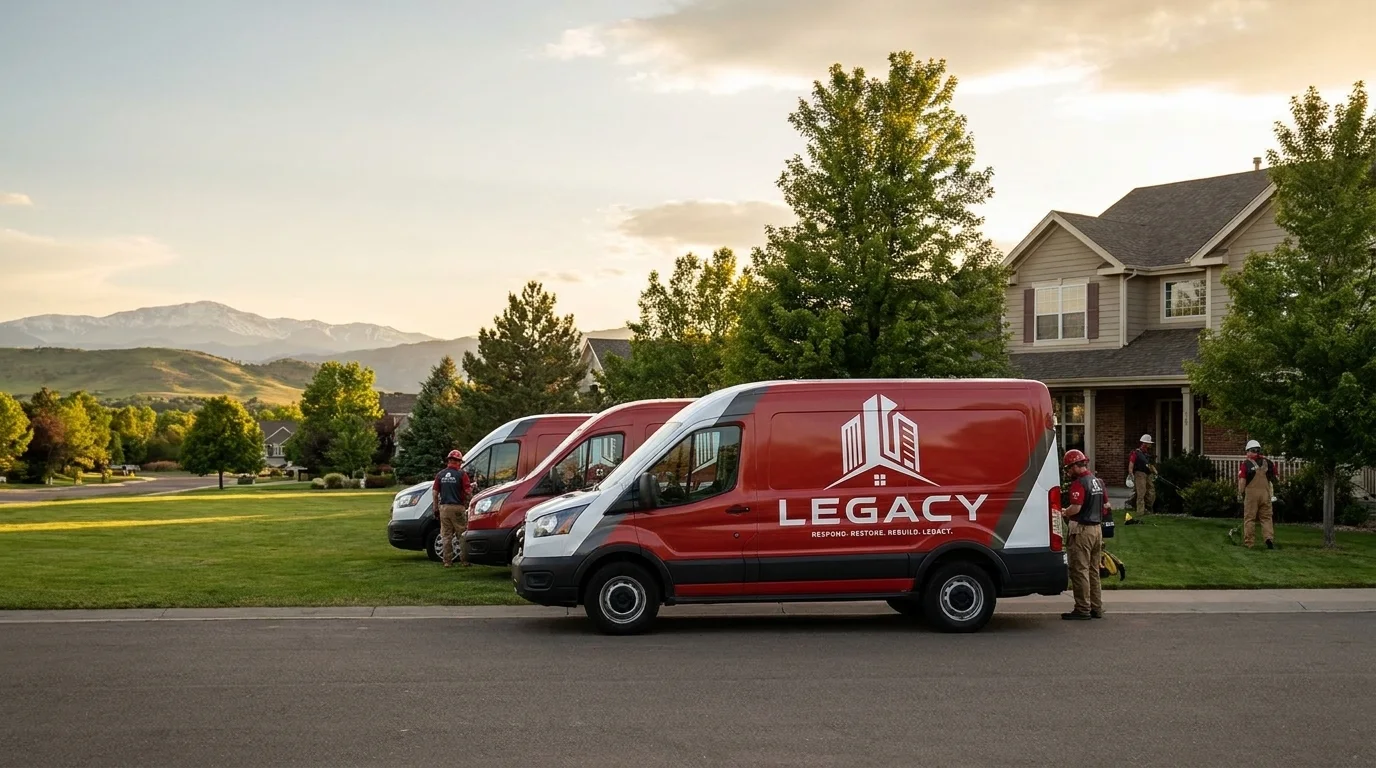
24/7 Emergency Board-Up and Tarping in Denver
24/7 emergency board-up and tarping in Denver and surrounding areas. IICRC-certified, insurance billing accepted. Call (888) 249-5867.
Need emergency board-up and tarping in Denver? Call now for emergency service and we answer 24/7.
A broken window after a break-in, a fire-damaged roof section, or storm-ripped shingles leave a structure wide open to weather, animals, and anyone passing by. Every hour that gap stays uncovered, wind-driven rain soaks insulation, snow melts into drywall, and the secondary damage bill climbs past what the original event caused. Emergency board-up and tarping stops that clock by sealing the structure before the next weather system or nightfall.
What Emergency Board-Up and Tarping actually involves
Board-up means covering broken windows, damaged doors, and breached walls with plywood sized and fastened to resist wind and forced re-entry, not just loosely nailed sheeting that comes off in the next gust. Roof tarping means stretching reinforced poly sheeting over missing or compromised shingles, decking, or chimney flashing and securing it with furring strips, screws, and sealant so it holds through sustained wind rather than flapping loose by morning. Both are temporary measures meant to buy time until permanent repairs, insurance adjustment, or full reconstruction can happen. The work itself usually takes a couple of hours per structure depending on the size of the opening and roof pitch, and it’s done with an eye toward not causing additional damage, no screws through good decking, no fasteners that tear tarps in the first storm.
Our process
- Site safety check. Before anyone climbs a ladder or steps near a breached wall, we check for structural instability, exposed electrical, sharp debris, and roof pitch or slope hazards.
- Measure and document. We photograph the damage and measure every opening for the adjuster’s file and for accurate material cutting, since an undersized board or tarp defeats the purpose.
- Board the openings. Plywood is cut to fit, set against the frame, and fastened into solid structural members, not just trim, so it resists wind pressure and tampering.
- Tarp and seal the roof. Tarps are run past the damaged area onto sound roofing, secured with batten strips rather than loose nails, and sealed at seams and edges to shed water instead of channeling it under the covering.
- Final walk and handoff. We confirm every opening is sealed, note what’s temporary versus what needs permanent repair, and leave the documentation you’ll need for your claim.
What separates a good board-up and tarping response from a bad one
The most common failure is treating this as a quick patch instead of a weatherproofing job. A tarp stapled only at the edges will balloon and tear in the first real gust off the Front Range. Plywood nailed to trim instead of studs pulls loose the moment someone tests it. Less careful crews also skip documentation, which becomes a problem later when an adjuster asks why the roof is missing a section no one photographed. A thorough response measures twice, fastens into framing members, overlaps tarps past the damage line onto solid roofing, and leaves a paper trail: photos, measurements, and a written scope, so the temporary fix and the eventual insurance claim line up.
What does Emergency Board-Up and Tarping cost?
Costs depend on the number of openings, roof pitch, height, and how much material is needed to seal the structure properly. Every loss is different, which is why Legacy Resto LLC provides a written scope before work begins rather than a flat quote over the phone. Homeowners insurance typically covers emergency board-up and tarping as a mitigation expense when it follows a covered peril like fire, storm, or break-in, since insurers generally want the property protected from further loss.
| Scenario | Typical range |
|---|---|
| Single broken window, board-up | $150 - $400 |
| Door or larger opening, board-up | $300 - $700 |
| Small roof section tarp (under 10 squares) | $400 - $900 |
| Large or steep-pitch roof tarp | $900 - $2,500 |
| Multiple openings plus roof tarping | $1,500 - $4,000 |
Seasonal & regional considerations
Denver’s hail season and sudden summer thunderstorms are the leading cause of roof damage that needs emergency tarping, often followed by a dry stretch that tempts homeowners to wait on permanent repairs. Winter brings a different risk: snow load on a compromised roof section or wind-driven cold air through a boarded opening can freeze pipes near exterior walls if the seal isn’t tight. Both scenarios reward a fast, properly fastened temporary fix over a rushed one.
Service area
Legacy Resto LLC provides emergency board-up and tarping throughout Denver.
If a storm, fire, or break-in has left your home or building exposed, don’t wait for the next weather system to make the damage worse. Call (888) 249-5867 to get a secure board-up and tarp in place and protect what’s inside.
Frequently Asked Questions
Does homeowners insurance cover emergency board-up and tarping?
How long does a tarp or board-up hold before it needs to be replaced?
Will boarding up my windows make my home look like it's abandoned or unsafe?
Can you tarp a roof in the rain or during active bad weather?
What happens after the board-up or tarp is in place?
Looking for the best emergency board-up and tarping company in Denver?
Legacy Resto llc provides licensed and insured emergency board-up and tarping in Denver, Colorado and the surrounding area, and has served local property owners since 2022. We answer calls 24/7 — call (888) 249-5867 for immediate help.
Need Emergency Board-Up and Tarping now?
We respond 24/7 across Denver and surrounding Colorado cities.