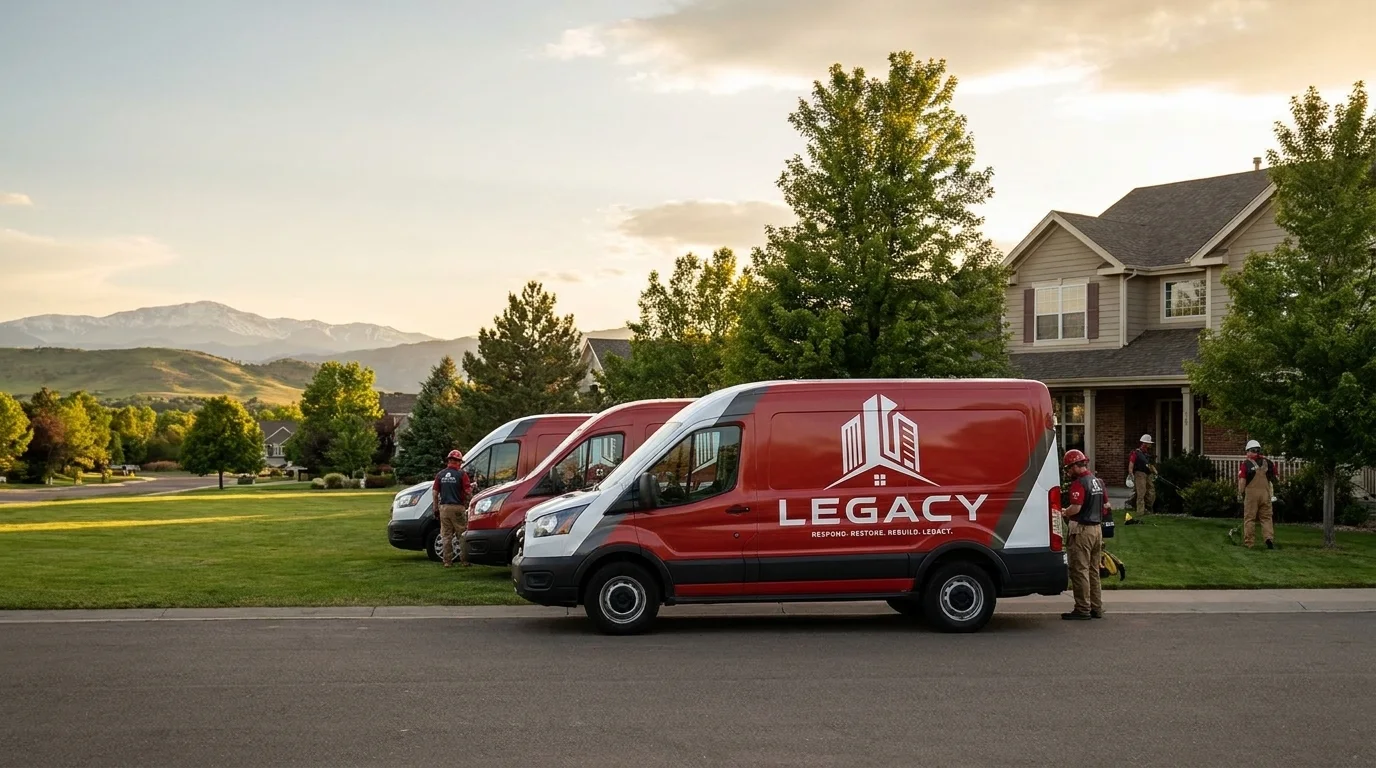
Large Loss and Catastrophic Response in Denver
Large loss and catastrophic response in Denver and surrounding areas. IICRC-certified, insurance billing accepted. Call (888) 249-5867.
Large loss events don’t look like a typical insurance claim. They look like a hotel with four floors of saturated carpet pad, a manufacturing plant with a collapsed roof deck after a hailstorm, or a mixed-use building where a sprinkler head failure soaked three units and the electrical room below them. These losses involve multiple structures, multiple trades, and claim reserves that run into six and seven figures, and they require a response team built for scale from the first phone call, not one that improvises as the scope grows.
What Large Loss and Catastrophic Response actually involves
A large loss is defined less by the cause of damage and more by its size, complexity, and the number of stakeholders involved: property owners, general contractors, multiple insurance carriers or a single carrier’s large loss unit, public adjusters, and sometimes legal counsel. Projects typically span tens of thousands of square feet and combine several of our core disciplines at once: water extraction and structural drying, fire and smoke mitigation, mold containment, and reconstruction, run in parallel rather than in sequence.
Equipment deployment scales with the loss. Instead of a handful of air movers and a dehumidifier, a catastrophic response may mobilize dozens of low-grain-refrigerant dehumidifiers, desiccant units for large open-air warehouses, and injectidry systems for wall cavities across an entire floor plate. Documentation scales too: moisture logs, psychrometric readings, and photo records are tracked per room or per unit across the property, not just per job, because a single claim file may need to reconcile dozens of individual leases or units under one master policy.
Our process
- Rapid mobilization and scope triage. We dispatch a project lead to assess the full footprint of the loss, identify life-safety and structural concerns first, and establish which areas need immediate mitigation versus monitoring.
- Multi-crew deployment. Separate crews work affected zones simultaneously, coordinated through a single project manager so water mitigation on one floor doesn’t stall reconstruction prep on another.
- Centralized documentation for claims review. Moisture mapping, equipment logs, and daily progress photos are organized by unit, floor, or department so the large loss adjuster or carrier’s examiner can review the file without chasing down fragmented paperwork.
- Trade sequencing and reconstruction handoff. As drying and mitigation complete in each zone, we transition that zone into our reconstruction and general contracting workflow under a single scope of work, reducing the handoff gaps that stall multi-building projects.
- Final walkthrough and claim close-out. We reconcile final documentation against the original scope before the project is signed off, which matters when a claim involves multiple proofs of loss or phased payments.
What separates a good large loss response from a bad one
The most common failure on catastrophic jobs isn’t poor drying technique, it’s poor coordination. A crew that treats a 40-unit apartment fire like forty separate small jobs will lose track of which units have been cleared, duplicate equipment, and generate documentation that doesn’t hold up when a carrier’s large loss examiner asks for a unit-by-unit accounting. Adjusters on these files are specifically looking for consistent, time-stamped moisture and drying logs, clear chain of custody on removed contents, and a scope that was written before demolition began, not reconstructed afterward to match invoices.
Another common gap is under-scoping secondary damage. On a catastrophic loss, water or smoke rarely stays confined to the obvious area, it tracks through shared mechanical chases, elevator shafts, and HVAC returns. A response team that doesn’t inspect adjacent units and common areas early will miss conditions that surface as mold complaints or odor callbacks weeks later, turning a closed claim back into an open one.
What does Large Loss and Catastrophic Response cost?
Costs on catastrophic projects are driven by square footage, number of affected units or structures, and how many trades run concurrently, so industry-typical ranges are broader here than on a single-room claim. Every large loss is different, and Legacy Resto llc provides a written scope of work before mobilization begins so the property owner and carrier are working from the same numbers. Most commercial property and multi-family policies cover large loss mitigation and reconstruction, though coverage limits, business interruption terms, and per-unit deductibles vary by policy and should be confirmed with the carrier early.
| Scenario | Typical range |
|---|---|
| Multi-unit water loss (10-20 units) | $75,000 - $250,000 |
| Commercial fire, single building | $150,000 - $750,000 |
| Large hotel or hospitality water event | $200,000 - $1,000,000+ |
| Industrial facility storm or roof failure | $250,000 - $1,500,000+ |
| Multi-building catastrophic claim | $500,000 - multi-million |
Seasonal & regional considerations
Denver’s hail season, typically late spring through midsummer, is the single biggest driver of catastrophic commercial claims in the metro, often hitting multiple properties in the same storm track within hours of each other. Winter freeze events add a second pattern: aging commercial plumbing and fire suppression lines in older brick and masonry buildings downtown are prone to splits during hard freezes, which can flood several floors before anyone on site notices the drop in water pressure. Both patterns mean catastrophic response in Denver is often regional in timing, with several large properties needing mobilization within the same window.
Service area
Legacy Resto llc handles large loss and catastrophic response for commercial, industrial, and multi-family properties throughout Denver.
If you’re managing a loss that spans multiple units, floors, or buildings, call (888) 249-5867 to get a large loss project lead on site and a written scope moving before the claim file gets more complicated than it needs to be.
Frequently Asked Questions
Does homeowners or commercial insurance cover large loss and catastrophic response?
How is a large loss claim different from a standard property damage claim?
How many crews are typically mobilized for a catastrophic loss?
How do you prevent secondary damage like mold on a catastrophic claim?
Looking for the best large loss and catastrophic response company in Denver?
Legacy Resto llc provides licensed and insured large loss and catastrophic response in Denver, Colorado and the surrounding area, and has served local property owners since 2022. We answer calls 24/7 — call (888) 249-5867 for immediate help.
Need Large Loss and Catastrophic Response now?
We respond 24/7 across Denver and surrounding Colorado cities.