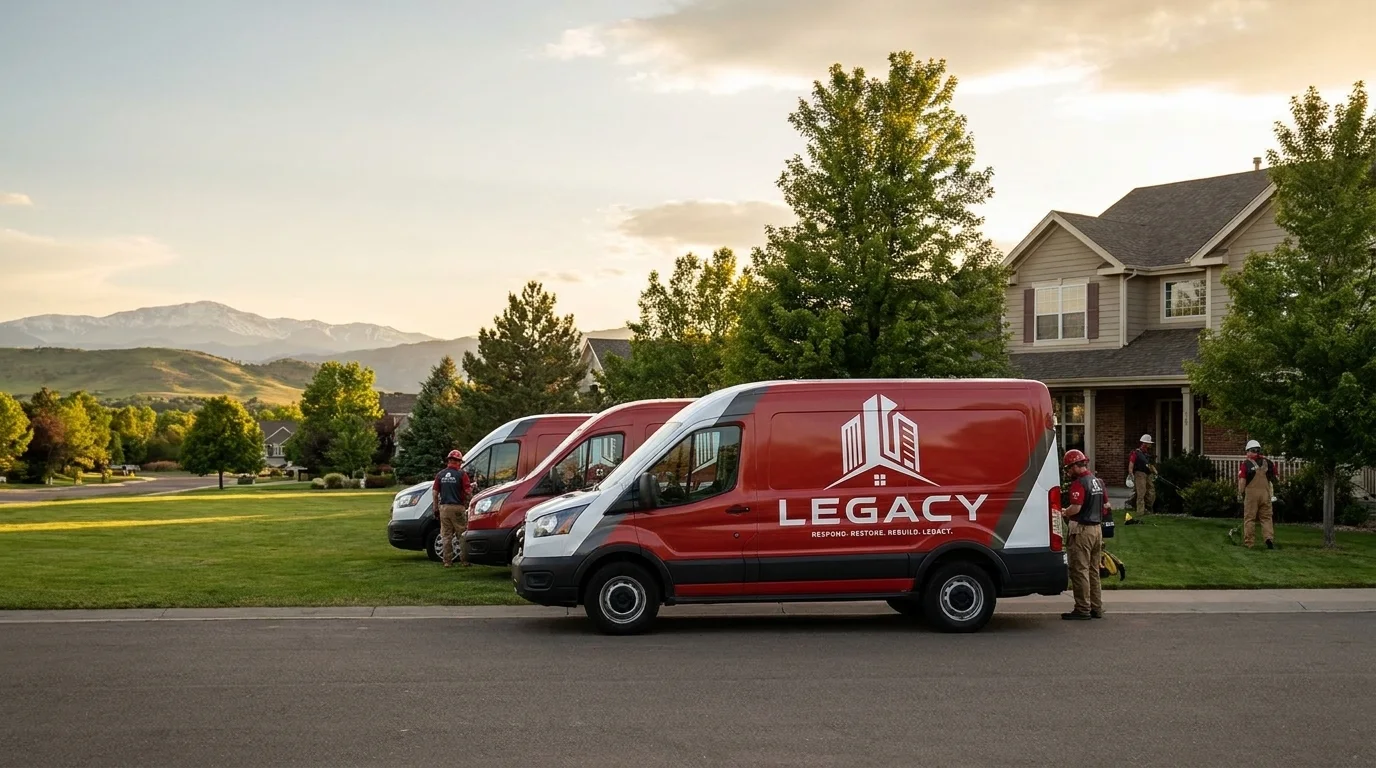
24/7 Emergency Smoke Damage Restoration in Denver
24/7 emergency smoke damage restoration in Denver and surrounding areas. IICRC-certified, insurance billing accepted. Call (888) 249-5867.
Smoke damage emergency in Denver? Call (888) 249-5867 now, we answer 24/7. The fire is out, but the smell isn’t going anywhere on its own. Smoke particles are acidic, microscopic, and they migrate into wall cavities, HVAC ductwork, and porous materials within hours of a fire, not days. A kitchen fire that looked contained to one room can leave soot film on surfaces three rooms away, and the longer it sits, the more it etches into finishes and permanently discolors grout, metal, and fabric.
What Smoke Damage Restoration actually involves
Smoke damage restoration is a different discipline from fire structural repair. It’s about identifying what kind of residue you’re dealing with (dry protein smoke from a grease fire reads and cleans differently than wet smoke from smoldering synthetics) and matching the cleaning method to the surface and the soot type. That means air scrubbing to pull particulate out of circulation, targeted cleaning of hard surfaces and contents, deodorization to neutralize odor at the molecular level rather than mask it, and in many cases sealing or repainting surfaces that have absorbed residue below the surface. Our technicians hold IICRC FSRT certification specifically for fire and smoke restoration work, and Denver’s dry climate actually helps odor-control equipment work faster once the source residue is removed, but it won’t compensate for skipping the steps.
Our process
- Soot and residue assessment. We identify the smoke type (protein, synthetic, or wet smoke) because each reacts differently to cleaning agents and dictates the whole plan.
- Containment and air scrubbing. We isolate affected zones and run HEPA air scrubbers to stop residue from recirculating through the HVAC system into unaffected rooms.
- Surface and content cleaning. Walls, ceilings, cabinetry, and salvageable contents are cleaned with method-specific agents, dry sponges for certain soot types, wet cleaning or encapsulation for others.
- Odor neutralization. Thermal fogging or ozone treatment (used only in unoccupied spaces, per protocol) breaks down odor-causing compounds trapped in porous materials rather than covering them with fragrance.
- Final verification. We re-inspect treated surfaces and HVAC components before closing out the job, since residual odor almost always means missed residue, not an air-freshener problem.
What separates a good smoke damage response from a bad one
The most common mistake is treating smoke damage restoration like general cleaning: wiping surfaces without addressing what’s inside the ductwork or behind outlet covers, where residue keeps re-depositing for weeks. A less experienced crew will skip soot characterization entirely and use one generic cleaner on everything, which can smear protein residue into a permanent haze on painted walls. Insurance adjusters pay close attention to whether HVAC systems were inspected and cleaned, since an untreated duct system is the number one reason odor complaints resurface a month after a job is marked complete. A thorough operator also documents pre- and post-cleaning readings and photographs residue types, which matters both for quality control and for the claim file.
What does Smoke Damage Restoration cost?
Costs vary widely based on the smoke type, how far residue traveled, and whether HVAC systems and contents are involved. Every loss is different, which is why Legacy Resto llc provides a written scope of work before any cleaning begins, not a verbal estimate. Homeowners insurance typically covers smoke damage restoration when the underlying fire is a covered peril, though coverage for contents cleaning and odor treatment can vary by policy.
| Scenario | Typical range |
|---|---|
| Single room, light surface soot | $500 - $1,500 |
| Whole-room deep clean with odor treatment | $1,500 - $4,000 |
| Multi-room smoke migration, HVAC affected | $4,000 - $9,000 |
| Whole-house smoke and odor remediation | $9,000 - $20,000+ |
| Contents cleaning (per room, furnishings/textiles) | $500 - $2,500 |
Seasonal & regional considerations
Denver’s low humidity and frequent temperature swings mean smoke odor can seem to fade indoors during winter heating season, then resurface as warmer, humid air in spring reactivates residue trapped in wall cavities and carpet padding. Wildfire smoke events, common in the region during late summer, can also drive fine particulate into homes through HVAC intake and window gaps even without a fire on the property itself, which is a form of smoke damage that’s easy to underestimate because there’s no scorched material to point to.
Service area
Legacy Resto llc provides smoke damage restoration throughout Denver, from older brick bungalows in the central neighborhoods to newer construction with sealed HVAC systems, each of which holds and spreads smoke residue a little differently.
If your home still smells like smoke after a fire, or you’ve noticed a hazy film on surfaces following a nearby wildfire event, don’t wait for it to set deeper into your walls and ductwork. Call (888) 249-5867 to begin smoke and soot removal with a documented, insurance-ready scope of work.
Frequently Asked Questions
Does homeowners insurance cover smoke damage restoration?
Why does smoke smell come back weeks after cleaning?
What's the difference between protein smoke and synthetic smoke residue?
Can wildfire smoke damage a home even without a fire on the property?
How soon should smoke damage cleanup start after a fire?
Looking for the best smoke damage restoration company in Denver?
Legacy Resto llc provides licensed and insured smoke damage restoration in Denver, Colorado and the surrounding area, and has served local property owners since 2022. We answer calls 24/7 — call (888) 249-5867 for immediate help.
Need Smoke Damage Restoration now?
We respond 24/7 across Denver and surrounding Colorado cities.