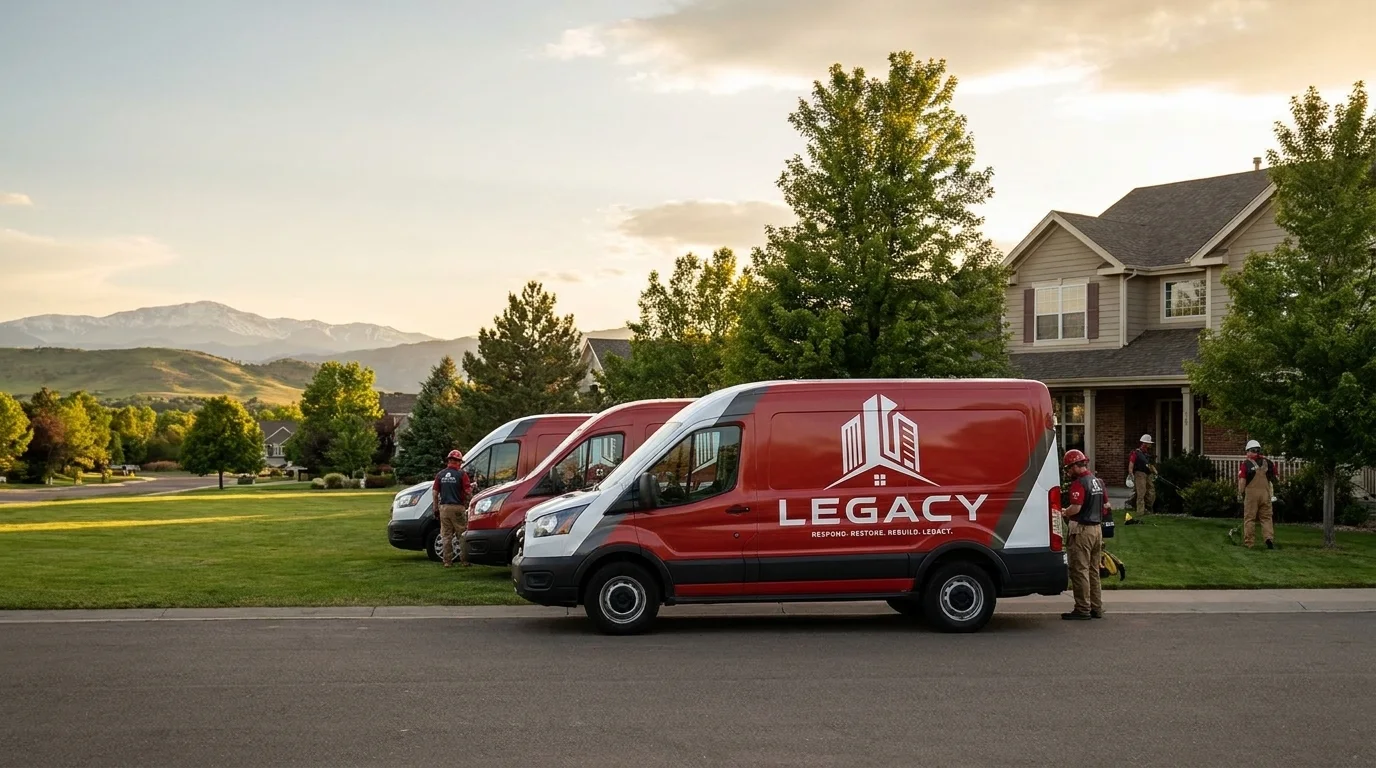
24/7 Emergency Storm Damage Restoration in Denver
24/7 emergency storm damage restoration in Denver and surrounding areas. IICRC-certified, insurance billing accepted. Call (888) 249-5867.
Storm damage emergency in Denver? Call (888) 249-5867 now. We answer 24/7 and dispatch a crew to stop the bleeding, whether that means a tarp over a hail-punctured roof or extraction for the water a toppled branch let into your attic.
A severe weather event rarely does one kind of damage. Hail punches through shingles and skylights, straight-line wind peels back roofing systems and drives rain into wall cavities, and a downed tree can crack a roof deck open in a single impact. The real risk isn’t always the obvious hole, it’s what happens in the 24 to 48 hours after, when unprotected openings let weather keep entering a structure that’s already compromised. Storm damage restoration is about closing that window fast and then documenting, drying, and repairing everything the storm actually reached.
What Storm Damage Restoration actually involves
Storm cleanup services start with stabilizing the structure, not with cosmetic repair. That means temporary roof tarping, board-up of broken windows or door openings, and controlling any active water intrusion before it reaches insulation, drywall, or framing. From there, the work splits into two tracks: structural drying and moisture mitigation for anything the storm let in, and damage scoping for the repair or reconstruction phase that follows. Equipment on a typical storm call includes moisture meters and thermal imaging to trace water behind finished surfaces, extraction equipment if standing water is present, and air movers or dehumidifiers if materials are already wet. Tree damage cleanup adds another layer: downed limbs or trunks resting on a roof structure have to be assessed for load before anyone climbs up to tarp, since a tree can be hiding a compromised deck or broken truss underneath.
Our process
- Safety and structural check. Before anything else, we confirm the roof, walls, and any storm debris are stable enough to work around or on, including whether a fallen tree is still bearing weight on the structure.
- Emergency tarping and board-up. Open roof sections, broken windows, and exposed wall cavities get covered immediately to stop ongoing weather intrusion, this is usually the single step that limits how much a loss grows overnight.
- Damage documentation. We photograph and measure affected roofing, siding, windows, and interior areas reached by wind-driven rain or tree impact, building the scope your insurance adjuster will reference.
- Water extraction and structural drying. If water got in, wet materials are extracted and dried using the same moisture monitoring protocols used on any interior water loss, tracked daily until materials read dry.
- Scope handoff for repair. Once the structure is stable and dry, we prepare a written repair scope, whether that’s shingle and decking replacement or full reconstruction of an affected section.
What separates a good storm damage response from a bad one
The most common mistake in storm cleanup is treating the visible damage as the whole loss. A hole in the roof gets tarped, but nobody checks whether wind-driven rain also tracked along the underlayment and soaked insulation three feet away from the opening. Adjusters look for exactly that kind of secondary moisture, and a scope that only covers the obvious impact point tends to get kicked back for revision, which delays your repair. Another gap: tree debris removal that happens before the structural damage underneath is documented, which makes it harder to prove what the tree actually broke versus what was pre-existing. A thorough response photographs before touching anything, moisture-maps the full affected area (not just the entry point), and sequences tarping, extraction, and drying so each step is documented for the claim file, not just completed.
What does Storm Damage Restoration cost?
Costs vary widely based on the size of the opening, how much water got in before tarping, and whether a tree or large debris is involved. These are typical industry ranges, not a quote, every loss is different and Legacy Resto llc provides a written scope before any work begins. Homeowners insurance typically covers sudden storm events like hail, wind, and tree impact under the dwelling and other-structures portions of a policy, subject to your deductible and policy terms.
| Scenario | Typical range |
|---|---|
| Emergency tarping, single roof section | $400 - $1,200 |
| Board-up, broken windows or door | $250 - $800 per opening |
| Wind or hail damage with minor water intrusion | $1,500 - $5,000 |
| Tree impact with roof deck damage | $4,000 - $15,000+ |
| Whole-home storm damage with interior water damage | $8,000 - $30,000+ |
Seasonal & regional considerations
Denver’s Front Range sees a distinct severe weather pattern: hail season runs roughly May through August, often paired with fast-moving high-wind events off the foothills. Older neighborhoods with original roofing and newer subdivisions with large shade trees both carry storm exposure, just different kinds, aging shingles are more vulnerable to hail penetration, mature trees are more likely to come down in straight-line wind. Severe weather damage repair in this region almost always means dealing with hail and wind first; less common systems, including tornado touchdowns or hurricane remnants reaching inland, are handled with the same tarping, drying, and documentation process regardless of what triggered the loss.
Service area
Legacy Resto llc responds to storm damage throughout Denver, Colorado.
If a storm has already opened up your roof, siding, or windows, every hour that opening stays uncovered adds to the damage an adjuster will eventually have to evaluate. Call (888) 249-5867 to get a crew on-site for emergency tarping and a full damage assessment.
Frequently Asked Questions
Does homeowners insurance cover storm damage restoration?
How quickly does a damaged roof need to be tarped after a storm?
A tree fell on my roof but didn't go through it, does it still need inspection?
How do you know if wind-driven rain got into the walls, not just the roof?
What's the difference between emergency tarping and the actual roof repair?
Looking for the best storm damage restoration company in Denver?
Legacy Resto llc provides licensed and insured storm damage restoration in Denver, Colorado and the surrounding area, and has served local property owners since 2022. We answer calls 24/7 — call (888) 249-5867 for immediate help.
Need Storm Damage Restoration now?
We respond 24/7 across Denver and surrounding Colorado cities.