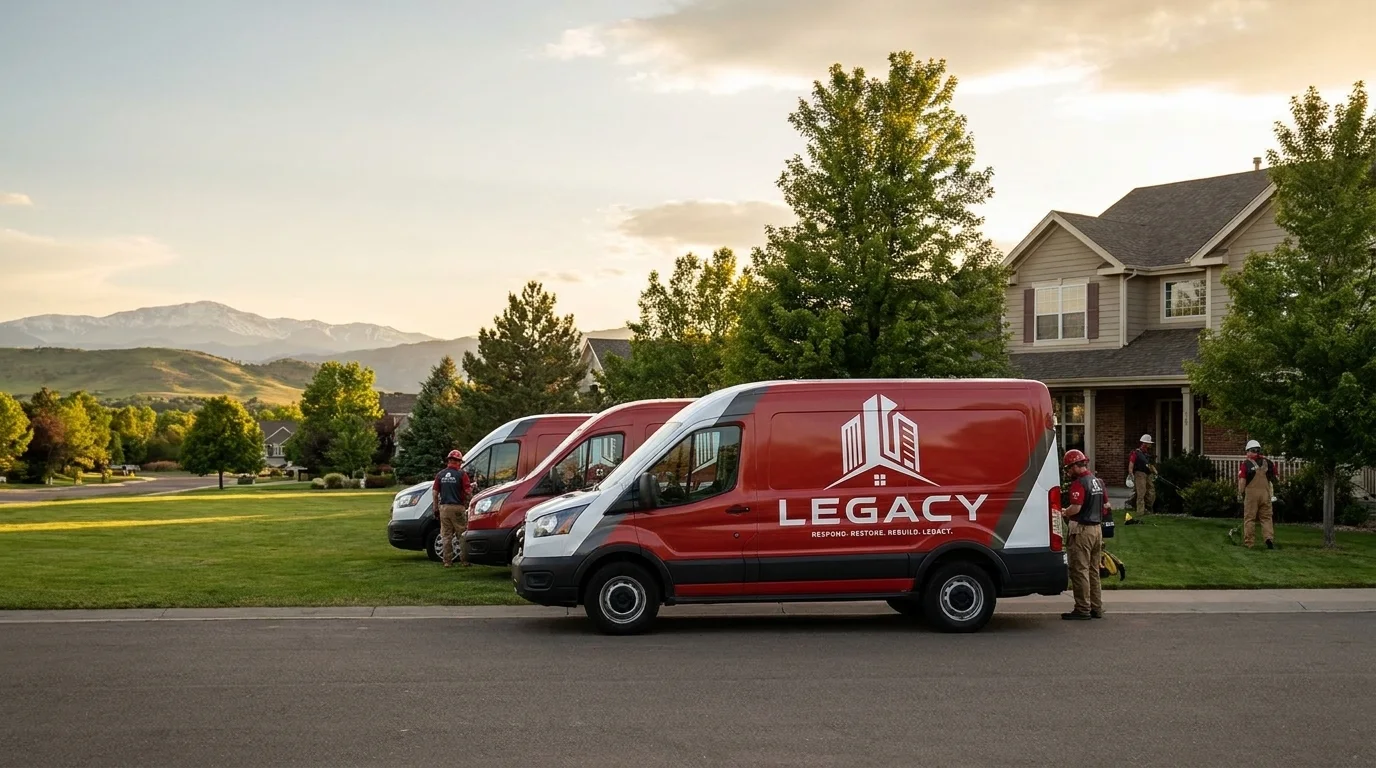
24/7 Emergency Water Cleanup in Denver
24/7 emergency water cleanup in Denver and surrounding areas. IICRC-certified, insurance billing accepted. Call (888) 249-5867.
Water spreading across your floor right now? A failed supply line, a overflowing washing machine, or a sump pump that quit during a storm can put hundreds of gallons into a home before anyone notices. The first hour determines whether you’re dealing with a wet carpet or a subfloor that has to be torn out. Legacy Resto llc answers 24/7 and gets extraction equipment running fast, because standing water that sits for even six to eight hours starts wicking into drywall, baseboards, and cabinetry in ways that are much harder to reverse.
What Emergency Water Cleanup actually involves
Emergency water cleanup is the immediate, time-sensitive response to active water intrusion, not the longer structural drying and rebuild work that follows a larger loss. It covers shutting down the water source where possible, removing standing water with submersible pumps and truck-mounted extraction units, and getting air movers and dehumidifiers in place before secondary damage sets in. Crews work with moisture meters and thermal imaging to find water that has already traveled under flooring or behind walls, since visible wet spots are rarely the whole story. On a typical residential call, extraction and initial equipment placement happen within the same visit, with drying monitored over the following days.
Our process
- Dispatch and hazard check. We confirm the water source is controlled or shut off, check for electrical risk in affected rooms, and identify the water category (clean, gray, or black) before anyone starts moving equipment.
- Standing water extraction. Submersible pumps handle bulk water first, followed by truck-mounted extraction for carpet, pad, and hard flooring to pull out what pumps can’t reach.
- Moisture mapping. Moisture meters and thermal imaging locate water that has migrated into wall cavities, subfloor, or under cabinetry, so drying equipment gets placed where it’s actually needed instead of just where the floor looks wet.
- Rapid drying setup. Air movers and dehumidifiers are positioned based on the moisture map, with containment added if the water category requires isolating affected materials from the rest of the home.
- Monitoring and documentation. We log moisture readings daily until materials reach dry standard, and photograph the loss at each stage for your insurance file.
What separates a good emergency water cleanup from a bad one
The most common mistake is stopping at the surface: pulling visible water, running a couple of fans, and calling it done while the subfloor or wall cavity stays saturated. That’s how a one-day cleanup turns into a mold problem three weeks later. A thorough response checks moisture content in the materials, not just the room, and adjusts equipment placement as readings change instead of leaving the same setup running on autopilot. Adjusters reviewing a water claim look for documented moisture logs, photos showing the extent of the intrusion, and a clear record of when drying started relative to when the water was discovered. Gaps in that timeline are often where claims get questioned or underpaid.
What does Emergency Water Cleanup cost?
Costs vary with the amount of standing water, how far it traveled, and whether flooring or drywall needs to come out to dry the structure properly. These are typical industry ranges, not a quote: every loss is different, and Legacy Resto llc provides a written scope before any work begins. Homeowners insurance typically covers sudden, accidental water damage, such as a burst pipe or appliance failure, though coverage for gradual leaks or flood-related water is usually handled differently.
| Scenario | Typical range |
|---|---|
| Single room, clean water, no flooring removal | $1,200 - $3,500 |
| Multi-room extraction with carpet and pad removal | $3,000 - $7,500 |
| Standing water with subfloor or drywall removal | $5,000 - $12,000 |
| Basement flooding, moderate depth | $4,000 - $10,000 |
| Large loss across multiple floors | $10,000+ |
Seasonal & regional considerations
Denver’s freeze-thaw cycles are a frequent cause of these calls. Pipes in exterior walls or unheated crawl spaces can freeze and split during a cold snap, then release water fast once temperatures rebound. Older homes in neighborhoods with galvanized or early copper plumbing see more pinhole leaks and fitting failures as that infrastructure ages, and basements built before modern drainage standards are more prone to backup during heavy spring runoff. Any of these can turn into a standing-water emergency with little warning.
Service area
Legacy Resto llc handles emergency water cleanup throughout Denver, responding to homes and businesses across the city around the clock.
If water is actively spreading through your home, don’t wait to see how bad it gets. Call (888) 249-5867 to schedule emergency water extraction and get drying equipment on-site before the damage spreads further.
Frequently Asked Questions
Does homeowners insurance cover emergency water cleanup?
How long does emergency water extraction usually take?
What's the difference between standing water removal and structural drying?
Can I stay in my home during emergency water cleanup?
What should I do while waiting for a crew to arrive?
Looking for the best emergency water cleanup company in Denver?
Legacy Resto llc provides licensed and insured emergency water cleanup in Denver, Colorado and the surrounding area, and has served local property owners since 2022. We answer calls 24/7 — call (888) 249-5867 for immediate help.
Need Emergency Water Cleanup now?
We respond 24/7 across Denver and surrounding Colorado cities.