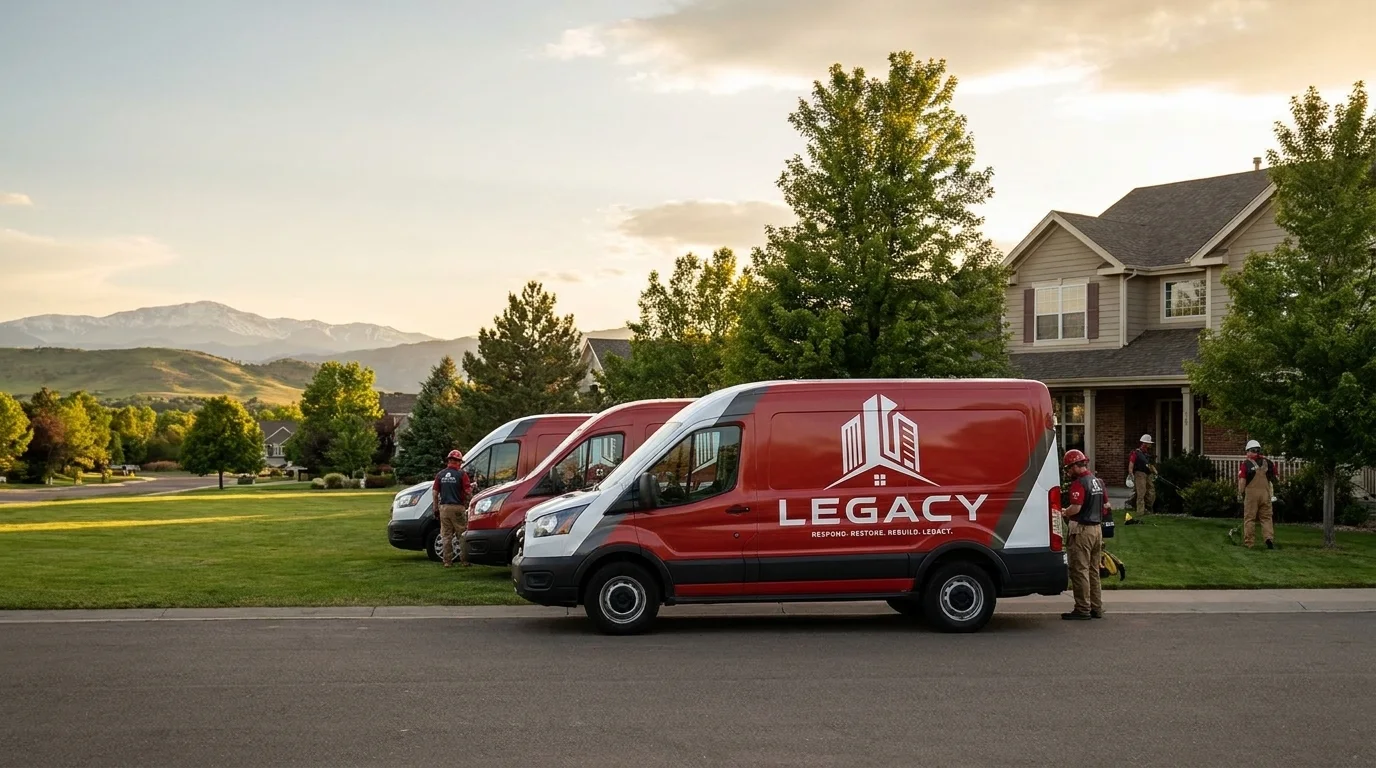
24/7 Emergency Water Heater Flood Cleanup in Denver
24/7 emergency water heater flood cleanup in Denver and surrounding areas. IICRC-certified, insurance billing accepted. Call (888) 249-5867.
Water heater flooding your utility closet or basement right now? Call Legacy Resto LLC at (888) 249-5867. We answer 24/7 and send a crew to start extraction and drying before the water migrates further into subfloors, drywall, and insulation.
A failed water heater rarely gives warning. A tank that’s been quietly rusting for years can split a seam overnight, or a supply line fitting can corrode through and let 40 to 80 gallons empty onto the floor in under an hour. Because most water heaters sit in basements, utility closets, or garages, the water often finds a path along baseboards, under walls, and into adjoining rooms before anyone notices. The longer it sits, the more materials it touches, and the more of this job becomes about hidden moisture rather than the puddle you can see.
What Water Heater Flood Cleanup actually involves
Water heater flood cleanup starts with identifying the source and confirming the water is shut off at the supply line, not just at the tank. From there it’s extraction of standing water with truck-mount or portable pumps, moisture mapping of flooring, baseboards, and wall cavities with a penetrating moisture meter, and placement of air movers and dehumidifiers sized to the affected square footage. If the tank sat on a finished floor for more than a few hours, we’re also checking subfloor and sill plate moisture, since water heaters are frequently installed near exterior walls or on slab-on-grade sections where wicking into concrete and framing happens fast. Depending on how long the leak went undetected, drying can run anywhere from two to five days, with daily moisture readings to confirm materials are actually back to dry standard rather than just dry to the touch.
Our process
- Source confirmation and shutoff verification. We confirm the water heater supply valve is closed and check for continued seepage from the tank, relief valve, or fittings before any drying equipment goes in.
- Extraction and demolition triage. Standing water is pulled first, then we decide what baseboard, drywall, or flooring needs to come out versus what can be dried in place, based on moisture readings and material type.
- Drying and moisture monitoring. Air movers and dehumidifiers are set per IICRC S500 guidelines, and we log moisture content daily in affected studs, subfloor, and drywall until readings match unaffected areas of the home.
- Sanitization where needed. If the water sat long enough to carry rust, sediment, or tank-lining residue onto flooring or into wall cavities, we clean and treat those surfaces before closing walls back up.
- Documentation for your claim. Photos, moisture logs, and a written scope of the affected area go into the file we provide, which matches what most carriers ask for during claim review.
What separates a good water heater flood response from a bad one
The most common mistake is treating this like a simple mop-and-fan job. A water heater sitting against a wall for hours doesn’t just wet the floor, it wicks up the drywall and into the wall cavity behind it, and that cavity will hold moisture long after the surface looks dry. Operators who skip moisture mapping often close up walls too early, which is how hidden damp framing turns into a bigger problem weeks later. Adjusters reviewing these claims typically want to see moisture readings taken over multiple days, not just a single reading at the start, along with clear documentation of what was removed and why. A thorough response also checks whether water traveled to an adjacent room or down to a lower level, since water heaters installed on upper floors or in closets above living space can cause damage well outside the room where the leak happened.
What does Water Heater Flood Cleanup cost?
Costs vary with how much water escaped, how long it sat before discovery, and whether it reached finished flooring, drywall, or a lower level. Every loss gets a written scope from Legacy Resto LLC before work begins, so you know what’s being done and why. Most homeowners insurance policies cover sudden water heater failures as a covered water loss, though gradual leaks from long-term neglect may be excluded, which is worth checking in your policy language.
| Scenario | Typical range |
|---|---|
| Small leak, caught within hours, no demo needed | $500 - $1,500 |
| Standing water in utility closet with drywall removal | $1,500 - $3,500 |
| Flooded basement, flooring and baseboard replacement | $3,000 - $7,500 |
| Water traveled to adjacent rooms or lower level | $5,000 - $12,000 |
| Tank failure with extended undetected leak and subfloor damage | $8,000 - $18,000+ |
Seasonal & regional considerations
In Denver, water heaters often sit in unheated garages or basement corners where winter temperature swings put extra stress on tanks and fittings, and a failure in January can mean standing water sitting against cold concrete for longer before anyone’s down there to notice. Many Denver homes built from the 1950s through the 1980s still have original or aging water heater installations, which raises the odds of a tank failure versus a newer unit with a longer remaining service life.
Service area
Legacy Resto LLC handles water heater flood cleanup throughout Denver, Colorado.
If your water heater has flooded a closet, basement, or garage, don’t wait to see if it dries on its own. Call (888) 249-5867 to schedule a moisture assessment and get drying equipment on-site before the water spreads further into your home.
Frequently Asked Questions
Does homeowners insurance cover water heater flood cleanup?
How do I know if my water heater leak reached the subfloor or wall cavity?
Should I turn off my water heater or the main water supply after a leak?
How long does drying take after a water heater floods a basement or closet?
Does rust or sediment from the tank need special cleaning?
Looking for the best water heater flood cleanup company in Denver?
Legacy Resto llc provides licensed and insured water heater flood cleanup in Denver, Colorado and the surrounding area, and has served local property owners since 2022. We answer calls 24/7 — call (888) 249-5867 for immediate help.
Need Water Heater Flood Cleanup now?
We respond 24/7 across Denver and surrounding Colorado cities.